THE LUCKY HORN
I see him hobbling down the street, no longer with his chest puffed out. He’s lost most of his swagger.
His tattered white cotton zip up summer jacket, now stained, matches his white Capezio shoes. His chest hair still manages to break through his opened collared shirt.
I approach him cautiously.
“Excuse me,” I say. “I’m looking for Astoria Park.”
He gives me a blank stare.
“The strip, where the Guidos park their Corvettes and make-out with their girlfriends,” I add.
Now he crumples one eyebrow and looks at me sternly.
“What makes you think I would know such things?” he says, finally.
“Well, first of all, the way you look.”
“And how is it that I look?”
“Pardon me for saying so, but, with those shoes, the white jacket and pinky ring, you look like a Guido. Except that—“
“Yes, except what?”
“Well, first of all, you’re old.”
He now looks off a little away from me, as if I’ve upset him.
“Yes, and what else?”
“I don’t want to—“ I say.
“Just go ahead dammit and say it.”
“Well, you look a little like a homeless person. Like you just woke up in the street. You have nice clothes, but they’re worn and dirty. Guidos are clean. Meticulous. And your hair isn’t slicked back. It’s unkempt.”
“That’s right,” he replies, running his hand through his graying hair. His speech is very dignified. I feel like I’m talking to a college professor.
“Why are you dressed in those clothes? I ask.
“You want to know why, eh?” he asks, in reply. “Are you some kind of newspaper writer, or something?”
“No, sir. I’m just interested. Interested in you.”
“When has anyone ever been interested in me?” he asks, his sentence tapering off into a mumble.
“Well, look, I’ve changed, see.” He adds, suddenly.
“How have you changed?’
“Like everyone else, I grew up. I’ve tried to fit in.”
I look at him screwing my eyes up like I’m confused.
“I wanted to meet girls.” He sighs. “I wanted to fit in.”
“You’re referring to your clothes?”
“It wasn’t just the clothes, you see.” He reaches inside a shopping bag that he’s carrying. He pulls out a wooden box. He unlatches the box and shows me its contents.
In the box is a pile of jewelry and other objects. There’s a sapphire ring, a thick gold chain. Large Christ heads and crucifixion pendants.
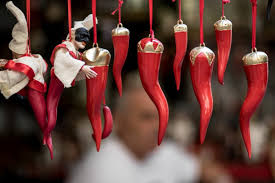
“These were my favorites,” he says, now holding up a red cornicello, or lucky horn. He has gold and silver ones too.
“These are spectacular,” I say. “I remember them well. I had a few myself when I was a kid.”
He gives me a sideward glance, as if to say, don’t try to kid me.
“My mother bought one for me.”
He looks me up and down.
He then pulls a white envelope out from his shopping bag.
“These,” he says, handing them to me, “were some of my most prized possessions.” Inside the envelope are Polaroids of cars. A Camaro (IROC Z). Cadillac El Dorado. Trams Am.
“What happened to them?” I ask.
“It’s all gone now.”
“What happened to you?”
“What happened?” he parrots back. “What happened is that I’ve tried to change, to grow up. You know, we’re assimilating now. We’re not that starving race of people that finally found a place to call home and make a living.”
“What do you mean when you say we’re assimilating?”
“You know damn well what I mean. And I’m not going to get into all of this. Even your readers know.
“They know that I’ve been trying to fade away, disappear into the void,” he adds.
“Why don’t you?”
“Because they keep pulling me back in?” he says, as if quoting a mafia film.
“How do they do that?”
“First it was Dago and guinea, then goombah, then greaser, then Guido. And the films. Have you seen them? We don’t get a break.” He pauses for beat, adding, “they won’t let me go.”
“Who are they and where would you go?”
He waves his arm around, pointing it at the world.
“How can I help?” I ask.
Suddenly he takes back the Polaroids from my hands, closes the jewelry box and shoves it all back in his shopping bag.
“I have to go now,” he says.
“Go where?”
“I have to go. To disappear. To vanish into thin air.”
“But how can you do that?”
“Like this, he says,” snapping his fingers across his chest.
“You’re still there. I can still see you.”
He resumes his dead stare and looks away from me, as if we’ve never spoken, or he can’t speak.
“But I wanted to—” I say.
He rushes off away from me, mumbling to himself.
“You dropped this,” I say to him, bending down as he darts away.
Turning the object over in my hands, I take a closer look now. It’s a red cornicello.
He’s too far away now. I put the lucky horn in my pocket, hoping that I’ll have some good luck. Maybe I’ve already had good luck.
Bio:
Mike Firorito is a regular contributor to Guido’s Corner. He is freelance journalist, and the the author of For All We Know, Mescalito Riding His White Horse, Falling from Trees, The Hated Ones, Sleeping with Fishes, Call Me Guido, Freud’s Haberdashery Habits, and Hallucinating Huxley. Check him out on his author website.
 OVUNQUE SIAMO