

Eleison by Laurette Folk. Bordighera Press, 2025. $20. 138 pp.
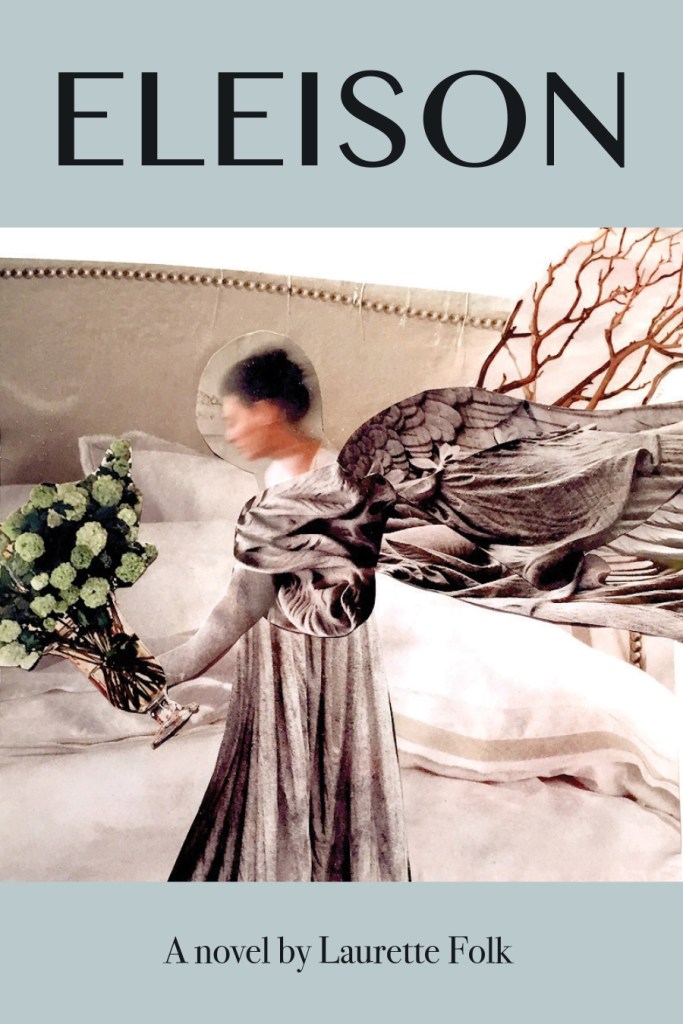
Reviewed by Vincent Panella
This is a book of family and a book of dreams, written from multiple viewpoints with chapters — except for one — devoted to members of the Russo family and the story of their three generations in America. They are ostensibly the most ordinary of families, neither rich nor poor, not particularly well educated and yet in their quotidian life they bear more than their share of calamities, including untimely death, lost love, divorce, infidelity, and family secrets too painful to speak about.
The key chapters are written in the first person and occur mid-narrative, and these are in the voice of Nicoletta, a divorced, single mom who sees herself as not only physically unattractive, but lonely and a bit lost, unhappy with her attempts at self-realization, one being an affair with a friend’s father. Perhaps because of this unhappiness Nicoletta also sees herself as clairvoyant, able to find meaning in the past through dreams or intensely rendered memories which always relate to the emotional issues at hand.
If there’s a central action in the novel it lies with the vulnerable Nicoletta, who finds herself sexually obsessed with the charming but tortured local parish priest. His rectory is a few doors down from the Russo house, and one day Nicoletta screws up her courage to visit, there to confess her attraction. Their feelings turn out to be mutual, and the solution to this dilemma provides an element of suspense to the narrative.
Nicoletta hones her abilities as a clairvoyant through her friendship with a kindred spirit named Sabine, a Haitian who draws her powers from her own religion. Sabine helps Nicoletta peer into the lives of the other family members as they weather life’s challenges. Each character copes in his or her own way, and this is the narrative challenge Folk meets so well. In this family story we encounter the patriarch whose one-time infidelity haunts him even on his death bed; the mother who holds the family together from the kitchen, and who herself bears a personal secret never spoken about; the brother so obsessed with getting women into bed that he ignores true love, and the charming priest not always dressed in his cassock, tortured by guilt over the suicide of his former lover. Throughout however, Nicoletta makes herself known as the moral and spiritual center of the story.
There’s much to do with religion in this novel, and Nicoletta is a modern day Sybil. The Catholic religion is a starting point for a more mystical vision. The novel pivots on the irony that the Catholic religion, to which most in the Russo family still pay lip service, is inadequate to their needs since it does not address the challenges faced by today’s families in which economic and spiritual survival are so difficult to attain.
The story is driven by the characters who cope with crises that life presents, the crises of aging, illness, untimely death, love lost and love discovered, all of this in beautifully written prose. Nicoletta takes the reader into a world of dreams in which the past is a heightened reality. The novel constantly strives and achieves a deepening based on something more than simple back story, and Nicoletta personifies the idea that a solution exists beyond the still valid tenets of structured religion.
The novel’s title has something to say about this question. Eleison is half of the well known prayer – God have Mercy. The omission of this reference to a Supreme Being leaves us with a simple plea not unlike the “quality of mercy” so beautifully called for in Shakespeare’s Merchant of Venice. The shorter title suggests an alternate way to find beneficence and grace. This is Nicoletta’s plea in this relentless and writerly attempt to take life to the next level. The suggestive title and the examples of the Russo family’s share of challenges give the reader plenty to think about after the book is closed.
 OVUNQUE SIAMO