BOTH MY GRANDMOTHERS
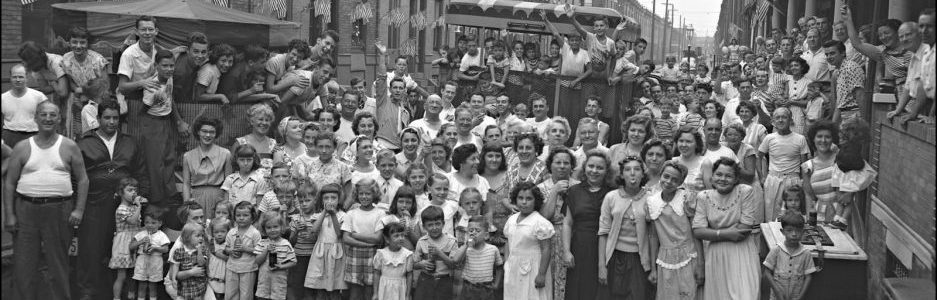
Between 1861 and 1918, 16 million people emigrated from Italy. Many were women summoned to marry men they did not know and forced to leave their beloved Italy for America. Eloise’s personal essay, “Both My Grandmothers” is about two of these women, her grandmothers. Eloise brings their stories together into one while she interweaves excerpts from her creative non-fiction stories, “Chestnuts and Iron” and “With Nerves of Steel”, both originally published in Ovunque Siamo in 2022 and 2025, respectively.
Giulia Marcuzzi sat on the beach and gazed at the deep blue waters of the Mediterranean Sea. It was her day off. She loved her bella vita in Alexandria, and her new life as a nanny for a loving Egyptian family. At times, they would even take her with them on holidays to the Western Desert. On one occasion, a photo was taken with her sitting proudly on a camel’s back.
Giulia was eager to post that photo to her family in Udine, Northern Italy. And with that same eagerness, her proud father, Valentino, hung the photo on the wall of his barbershop as soon as he received it. Soon after, Leonardo Fabbro, a 24 year old who had just returned from America where the streets supposedly were ‘paved with gold’ came in for a hair cut. When he saw the photo of Giulia with dark, deep set loving eyes, he immediately knew he wanted her as his wife. And that was that!
Valentino knew Leonardo’s family and was certain he would make a good husband, so he immediately posted a registered letter to Giulia telling her to return home. Giulia was devastated. She was just seventeen years old. She had heard about other girls being ‘sold off’, but she didn’t want any part of it. She certainly wasn’t going to marry someone sight unseen! Not her! She had thought that time was over. It was already 1908. Her father reminded her that she had no choice. “Non hai scelta!”
Like so many before her, though, it was her fate. Giulia had thought that most girls who were forced to marry were from Southern Italy, from the Mezziogiorno. She never dreamed that she would be married off like this, nor that her fate would be so painfully twisted with the fate of one of them, a Luisa Spadafora.
~~~~~~~~~
Luisa was from Figline Vegliaturo, a small village in Calabria in the deep South of Italy. She was called to America at about the same age as Giulia, but thirteen years earlier. Luisa’s father, Pietro, also gave Luisa no choice. He was a tenant farmer living as if he were fodder for his landowner. His life had always been a life of poverty, and King Umberto I with his House of Savoy certainly saw to that.
Luisa was to marry Luigi Carbone, the neighbour’s son. Luigi had left for America two years ago. Everyone thought that Luigi would do well because his people had iron in their blood. They forged iron with charcoal made from the ancient black pines of the Sila Mountains. Both Luisa and Luigi were born into a world where nothing belonged to them – no communal lands, no schools. They were the illiterate contadini. A good reason for them to seek a better life in America.
At the age of eighteen, Luisa was forced to leave her beloved Kaleb with its roasted chestnuts free for the taking, its fields of cipolle, finocchi and ulivi. No more would she dance the tarantella with her friends in the streets and watch the sun set crimson orange over the turquoise waters of the Tyrrhenian sea. She so loved the green hills of Calabria, where she herded sheep with her father, spun wool with her mother. She loved to huddle with her sisters as the unwelcome winds blew through the split chestnut plank walls of their home. She loved the sound of the crackling of an open fire as her father, iron poker in hand, roasted chestnuts for her, her sisters, her mother.
Her father whispered “tocca ferro” – touch iron for good luck as he handed her over to her new destiny. Luisa wept. Both Giulia and Luisa realized they had no choice but to face their new lives in America. And, somehow they knew that their lives would be difficult — difficult in the beginning, difficult in the middle, difficult in the end.
~~~~~~~
Giulia married Leonardo and their journey to America began. It was September 22, 1910. Leonardo had enough money to secure a small berth on a ship to America. Even though they had to share toilets and sinks with far too many, they didn’t have to sleep in the bowels of steerage, like so many other ‘lassoed’ Italian women. The worst part for Giulia, worse than the stench of the toilets, the grime of the sinks, worse than all the vomiting caused by the rough seas, was the arrival — the waiting, waiting on the gangplank to be processed by the authorities at Ellis Island in the USA, and then at the Port of Quebec City in Canada, where everyone was forced into quarantine on the island of La Grosse. The only thing that could drown out the cries of the children, hungry and cold, was the fear that lived inside each and every person there.
Luisa’s journey was much worse than Giulia’s. She was in the bowels of the ship, but with her brother-in-law, not with her future husband. Her journey in the crowded, dirty, rat infested steerage seemed to take forever. For the whole journey, all she could think about was getting out – out of the noise, out of the crowds, out of her own vomit. Her suitcase was her pillow, the one buckled closed with white hand-painted letters – letters she could not read.
Luisa arrived on Ellis Island on May 12, 1897 and was herded into stalls, just like the sheep back home — pushed and shoved, tested for this and that. She was documented as swarthy with close-knit eyebrows. Her signature: an X.
As her father’s words “tocca ferro” echoed in her ears, she entered America. However, she would soon learn that here, the people never touched iron. They only touched wood.
~~~~~~~~~
Tragedy after tragedy filled the lives of both Giulia and Luisa. They each lost their first child.
Giulia and Leonardo had moved to the Porcupine Mines in Timmins, Ontario a few months after arriving in Canada. It was the height of the Gold Rush and with Leonardo’s hard earned cash, they opened a confectionary store. But in 1911, tragedy struck. A fire broke out in the town. Fuelled by strong winds, it took the lives of many immigrants seeking their fortune there. Giulia had been set on fire. Leonardo dragged her out of the store to the lake to try to kill the flames, but she was already too severely burned. In the end, the doctors wanted to amputate her legs. Her screams in Italian were well understood, “Mio bambino! Mio bambino!” She was pregnant. She spent a year in the New Liskeard hospital. She won the battle to save her legs, but lost the battle to save her child. Walter, her first born, died of dysentery at the age of 6.
Luisa also lost her first born, a girl, Maria. Luisa’s body did not adapt well to America, nor to the rigours of always being on the move. Spike by spike, Luigi and Luisa had moved from place to place living in the tent cities of the Canadian Pacific Railway. From Boston north to Canada. Luigi worked the railways; Luisa carried babies inside and out. By the time she was thirty-three, she had borne six children and lost one. Five girls, one boy. And there were still two more to come.
~~~~~~~~~~
Giulia and Luisa still tried to keep hope alive even though tragedy had already struck. Life was trial after trial. And in the case of Giulia, she literally went to trial. It was the time of prohibition, and Giulia and Leonardo had moved south to Sudbury to open a convenience store in the Nickel City Hotel. It was the hub for Italian immigrants. Most Italians were secretly making wine in their basements, but some wanted hard liquor. Giulia agreed to meet a trainload of rum coming up from the USA. The woman ‘with nerves of steel’ could manage anything by now.
But, as luck would have it, Giulia was caught loading cases of liquor into their Model T Ford. She couldn’t believe it when she was arrested. This would absolutely never have happened in Italy! With four young children at home, Giulia was sentenced to one month in jail. Imagine, being a woman imprisoned in the 1920s! And once again, her screams rang out loud and clear. Still in Italian.
Luisa’s trials came from inside her own home under circumstances she was too browbeaten to do anything about. She too had moved south, but to a house on Pape Ave. in Toronto, where chestnut trees lined the streets. Often Luisa’s heart would break open, raw with the childhood memories of collecting chestnuts in burlap bags for her father to roast on hot coals. Soon
Luisa and Luigi’s brothers began to arrive from Calabria. Within days of arrival, Luisa’s brother begged to marry their eldest daughter. He was not refused. And soon after, Luigi’s nephew took their second daughter as his wife.
All of them lived under the same roof. Distress crept through the walls. Luisa could hear the yelling; she saw the bruises. She knew about the bed in the basement where other women were entertained. So she wasn’t surprised when her daughters disappeared. One in broad daylight; the other in the night – abandoning not only her husband, but also her child. Luisa tried to hide her shame. She wanted to cry, but she could not. She would not.
~~~~~~~~~~
In the late 1930s, the lives of Giulia and Luisa were united through destiny. In 1938, Giulia’s daughter, Lea, and Luisa’s son, Allegrino, married. As a child, Allegrino had been given the name Thomas Joseph. It seemed to suit the new world much better. Both Giulia and Luisa thought that their children had made a good choice. Lea was a music teacher. Tom, her only educated son, was a civil engineer. Both were born in Canada.
However, within two years, the cruel hand of fate gripped the lives of Giulia and Louisa and intertwined them into one heartbreaking tragedy. It was June 10, 1940. There was a knock on the door of Giulia’s apartment in the Nickel City Hotel. Whoever it was showed no patience. They were looking for signs of ‘enemy aliens’. They pushed their way in, rifled through prayer books, and scattered holy cards on the floor. A photo of Mussolini dropped out of the bible, but he went unrecognized. It was true that Giulia had sent her wedding ring and other gold jewelry to Mussolini, but that was before Mussolini joined Hitler. She had just wanted to help her Italia.
Later that same evening, Giulia’s phone rang. It was her daughter, Lea. The RCMP had arrested Tom. Her husband had been called to a meeting at the town, but he had not returned. No one knew where he was. Once again Giulia’s cries turned into screams. “Tradito di nuovo!” Betrayed again!
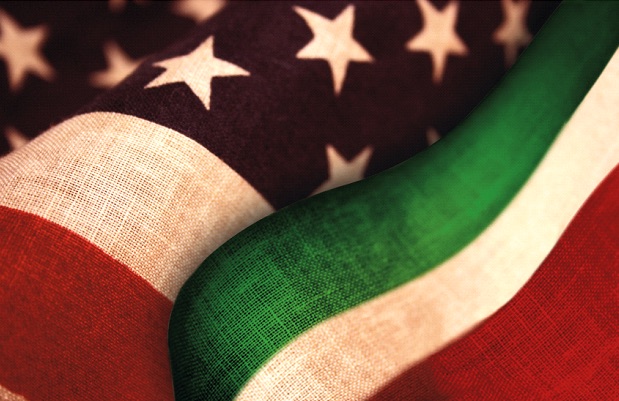
When Luisa received the same call from Lea, she ran through the gates of her front yard onto the street. With her arms resting on her breasts and her palms pressed together, she moved her hands in a back and forth motion, the way only Italians do. And she screamed. “Mannaggia! E come abbiamo bandiere italiane sulle fronte!” Her voice, the one that had been silenced for so many years, was finally being heard, loud and clear — Italians were cursed. They may as well wear the Italian flag on their foreheads.
Her first son, born Canadian, was being held as an enemy alien somewhere behind barbed wire. Italy and Canada had been officially declared enemies. Luisa had not laid eyes on her homeland in 50 years. Neither Mussolini nor Hitler meant anything to her. She simply did not understand.
On that day in 1940, the neighbours stood with Luisa in collective grief. Finally, they dragged her in off the street, sat with her on her back porch and waited as the sun set. They all were remembering their lives under a warmer sky, in a kinder world, kinder than the one that now held Luisa’s son captive, imprisoned by his own country. Five months later, Tom was unconditionally released from Camp Petawawa internment camp. They could not find fault with him. But from that day forward, for Giulia and Luisa, the streets would always be paved, not with gold, but with the cold steel of rusted barbed wire.
~~~~~~~
In this new reality, Tom and Lea still gave birth to five of their own children. I was one of them. My Grandma Luisa, the woman whose name I carry, passed away when I was only eight years old, and I have only one memory of her. I was a child waiting at the dining table in her home in Toronto. I remember the backside of her thick body, wide hipped and aproned as she bent over reaching for the dinner plates. But, I do not remember hearing her voice.
Grandma Giulia passed away later in my life, and my fondest memory of her was when I was a little girl living at the Nickel City Hotel in Sudbury, Ontario. My grandparents owned the hotel by that time, and of course, my grandmother was in charge of the kitchen. Like a tower bell calling its people to church in her beloved Italy, her homemade cooking called all the workers from the surrounding area for their lunch.
And as they sat on bentwood chairs at long refectory tables, drank carafes of red wine and devoured bowls of her spaghetti bolognese, I would run back and forth between the rows of tables. I still remember the freedom! To this day, the aroma of Grandma Giulia’s spaghetti sauce brings me home to who I am.
My body will always hold the memory of its ancestors, my grandmothers. And the blood that flows through this body, my body, holds their courage and their trauma. I can feel it. And with their resilience, I go on and I often imagine them also going on, returning hand in hand to “ a warmer sky, to a kinder world”, to their beloved Italia.
Bio:
Eloise Carbone is the grandchild of Italian immigrants. She explores her Italian heritage through her memoir poetry and creative non-fiction. In 2019, Eloise attended the Italian Diaspora Studies Writing Seminar in Calabria, Italy with Maria Mazziotti Gillan, and in 2026, she presented a personal essay at the Association of Italian-Canadian Writers Conference in Viterbo, Italy. Her work has been published in the USA, Canada and Italy. Eloise lives in Vancouver, Canada.

